Campbell's Median Price Hides Three Very Different Housing Markets
A buyer watching Downtown Campbell in the spring of 2026 could have looked at one listing sitting on the market for nearly two months and assumed something was wrong with it. Bad layout. Overpriced. A seller who wouldn't budge.
A few blocks away, in Central Campbell, a similar buyer watching a similar price point would have seen homes go under contract in under two weeks, sometimes with multiple offers stacked on top of each other.
Both of these things were true in Campbell at the same time. Neither buyer was wrong about what they saw. What they were both missing is that Campbell's citywide median price is a blend of three neighborhoods that don't behave like one market at all.
Citywide, Campbell has spent 2026 as a tight, fast-moving market. Over the three months ending July 2026, the median sale price sat at $1.8 million, up 1.9 percent from the same period a year earlier, with homes taking an average of 21 days to sell compared to 13 days the year before. That's still a seller's market by any standard measure. It's also a single number that erases everything interesting happening underneath it.
Pull the same window apart by neighborhood and the picture splits. Over the three months ending March 2026, homes in Downtown Campbell sold for a median of $1.6 million but took an average of 55 days to sell, up from just 13 days a year earlier, on a sample of only 9 closed sales that month. Over the three months ending May 2026, Central Campbell homes also sold for a median around $1.6 million, but in an average of 11 days, down from 23 days the year before, with price per square foot up 13.7 percent year over year to $922.
That's not seasonal noise. That's two neighborhoods inside the same city moving in opposite directions during overlapping windows.
| Sub-market | Median sale price | Days on market | Change vs. prior year |
|---|---|---|---|
| Downtown Campbell (3 mo. ending Mar 2026) | ~$1.6M | 55 days | Up from 13 days |
| Central Campbell (3 mo. ending May 2026) | ~$1.6M | 11 days | Down from 23 days |
| Citywide Campbell (3 mo. ending Jul 2026) | ~$1.8M | 21 days | Up from 13 days |
If you're pricing an offer, or pricing a listing, off the citywide figure alone, you're benchmarking against a blend that doesn't exist on the ground in either direction.
Downtown Campbell's slower pace isn't really about weak demand. It's about what's actually for sale within a five-minute walk of Campbell Avenue, and how little any two of those properties resemble each other.
Walk those blocks and you'll find small postwar bungalows and cottages, many built at 1,000 to 1,600 square feet on lots with alley access, sitting a block or two from brand-new luxury infill. J.C. Ainsley at Parklane, a new three-story townhome community, markets itself on being steps from the Farmers Market, Campbell Park, and the Los Gatos Creek Trail. Oasis at Monarch, another new-construction community near the downtown core, sells a similar walkable pitch with modern floor plans and Energy Star appliances. Both sit within the same reporting boundary as a 1948 cottage on an oversized lot with alley access, the kind of listing that shows up in Downtown Campbell inventory as often as the new builds do.
When your comparable sales pool mixes a renovated bungalow, an as-is fixer, and a three-story new-construction townhome, the math that produces a median stops behaving predictably. A thin sample, just 9 sales in the reference month, means one or two unusual closings can swing the average days-on-market or price per square foot dramatically. That's the mechanism behind the 55-day figure. It's not that Downtown Campbell buyers disappeared. It's that Downtown Campbell's inventory is genuinely harder to compare against itself.
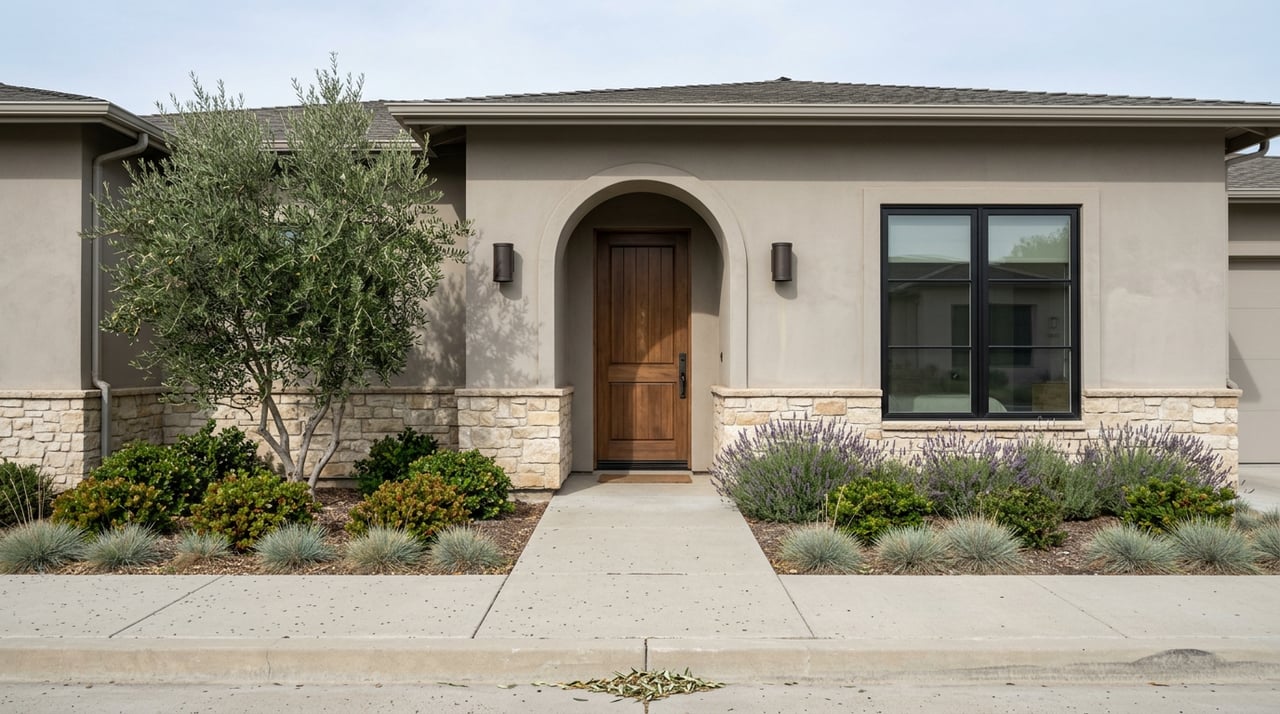
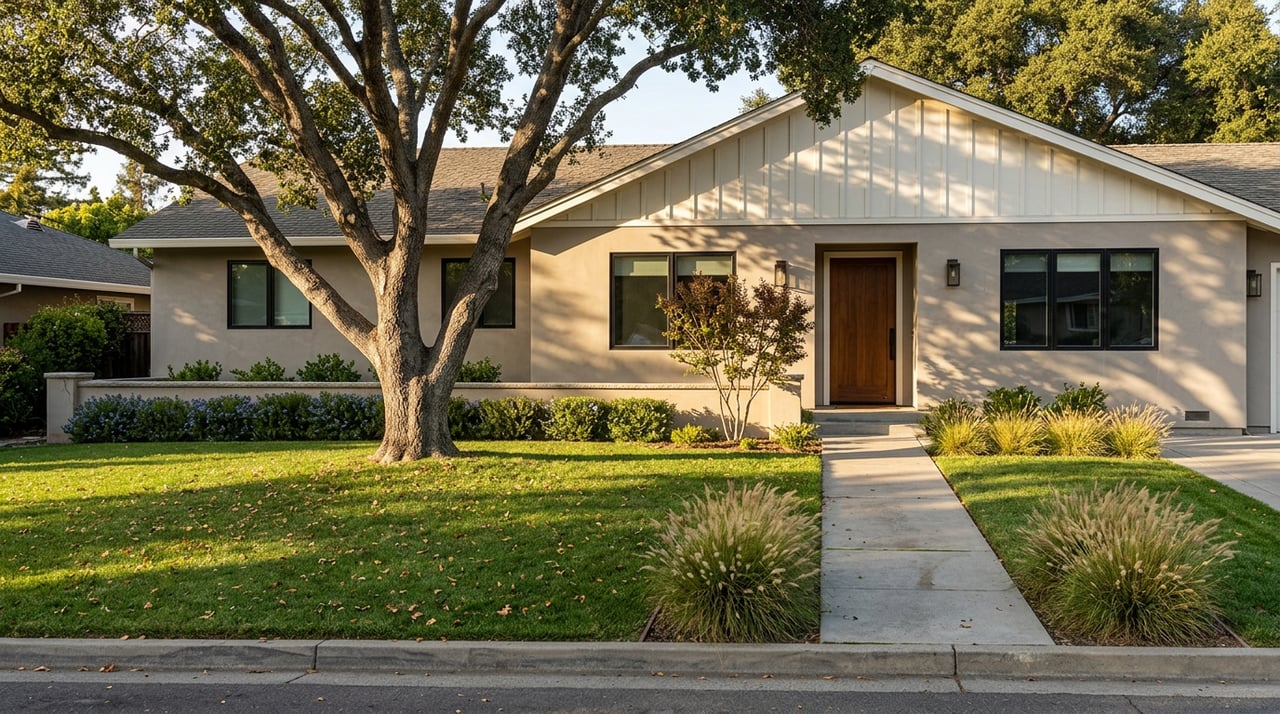
Central Campbell tells something closer to a textbook seller's market story, and the reason is almost the opposite of downtown's. The housing stock there leans more heavily toward a single, recognizable product: single-family ranch homes from the same postwar building boom, on similarly sized lots, without the same collision between historic cottages and ground-up luxury construction.
When the comparable sales pool is more uniform, buyers can price with more confidence, appraisers have an easier time supporting a contract price, and homes move faster because there's less guesswork involved in what a given property is actually worth. That consistency is very likely part of what's driving Central Campbell's price per square foot up 13.7 percent year over year while days on market fell by more than half.
West Campbell complicates the picture further rather than settling it. Homes there were largely built between 1940 and 1969, an older vintage than much of Central Campbell's tract housing, and typical values there have been running higher, around $1.9 million as of mid-2026, reflecting a mix of established residential streets and steady demand from buyers who want proximity to commuting routes without being inside the downtown core's price volatility.
Three neighborhoods, three different housing vintages, three different pricing patterns, all folded into one citywide median that tells you almost nothing about what you'll actually experience writing an offer on a specific street.
If you're comparing Campbell to other South Bay cities using a single median price, you're not wrong to start there. But before you set an offer strategy, ask which of Campbell's three markets your target property actually belongs to, because the negotiating posture is different in each.
In Downtown Campbell, a longer time on market doesn't automatically signal a motivated seller or a problem with the home. Given how thin and mixed the comparable pool is, it may just mean the property is waiting for the right buyer who values the walk to Orchard City Kitchen or The Ainsworth more than square footage. In Central Campbell, the opposite assumption applies. If you're touring a well-priced ranch home there, plan to move quickly, because the uniform housing stock means other buyers can evaluate it just as fast as you can.
This is also where school boundaries add another layer buyers often miss. Campbell's elementary-age children can fall into Campbell Union, Cambrian, or Moreland school districts depending on the exact address, sometimes on opposite sides of the same street. Two homes that look identical on a portal listing can carry different school assignments, different HOA structures if one sits in a newer development, and different commute profiles depending on proximity to the VTA light rail stop on Orchard City Drive or access to Highway 17, Highway 85, or the San Tomas Expressway. None of that shows up in a median price.
Campbell's appeal as a single city, walkable downtown, direct access to the Los Gatos Creek Trail, proximity to the Pruneyard, a genuine sense of small-town history around the Ainsley House and Campbell Historical Museum, is real and consistent across all three sub-markets. That's part of why the citywide median holds together as a marketing number even when it falls apart as a pricing tool. The lifestyle is shared. The housing stock, and the pace at which it sells, is not.
Is Downtown Campbell a worse investment because homes take longer to sell there? Not necessarily. A longer average time on market in a thin, mixed inventory pocket often reflects the difficulty of finding true comparables rather than weak demand for the location itself.
Should I expect a bidding war on every Central Campbell listing? Not every listing, but the more uniform housing stock there does mean well-priced homes tend to move faster and attract more competition than a comparably priced Downtown property.
Which Campbell school district will my home fall under? It depends on the exact address. Elementary and middle school boundaries in Campbell split between Campbell Union, Cambrian, and Moreland school districts, so it's worth confirming the specific assignment for any property you're seriously considering rather than assuming based on neighborhood name alone.
If you're comparing Downtown, Central, and West Campbell for your own move, the neighborhood-level numbers matter more than the citywide headline. Ana Pace works across these South Bay foothill markets daily and can walk you through what a specific address's comparable sales actually look like before you write an offer. Let's Connect.
Stay up to date on the latest real estate trends.
Get assistance in determining current property value, crafting a competitive offer, writing and negotiating a contract, and much more. Contact me today.
ANA PACE | CA DRE# 01940309
410 N SANTA CRUZ AVE LOS GATOS, CA 95030